
Home › Media › Scrap Metal Baler Buying Guide
10 Questions to Ask a Supplier When Buying a Scrap Metal Baler
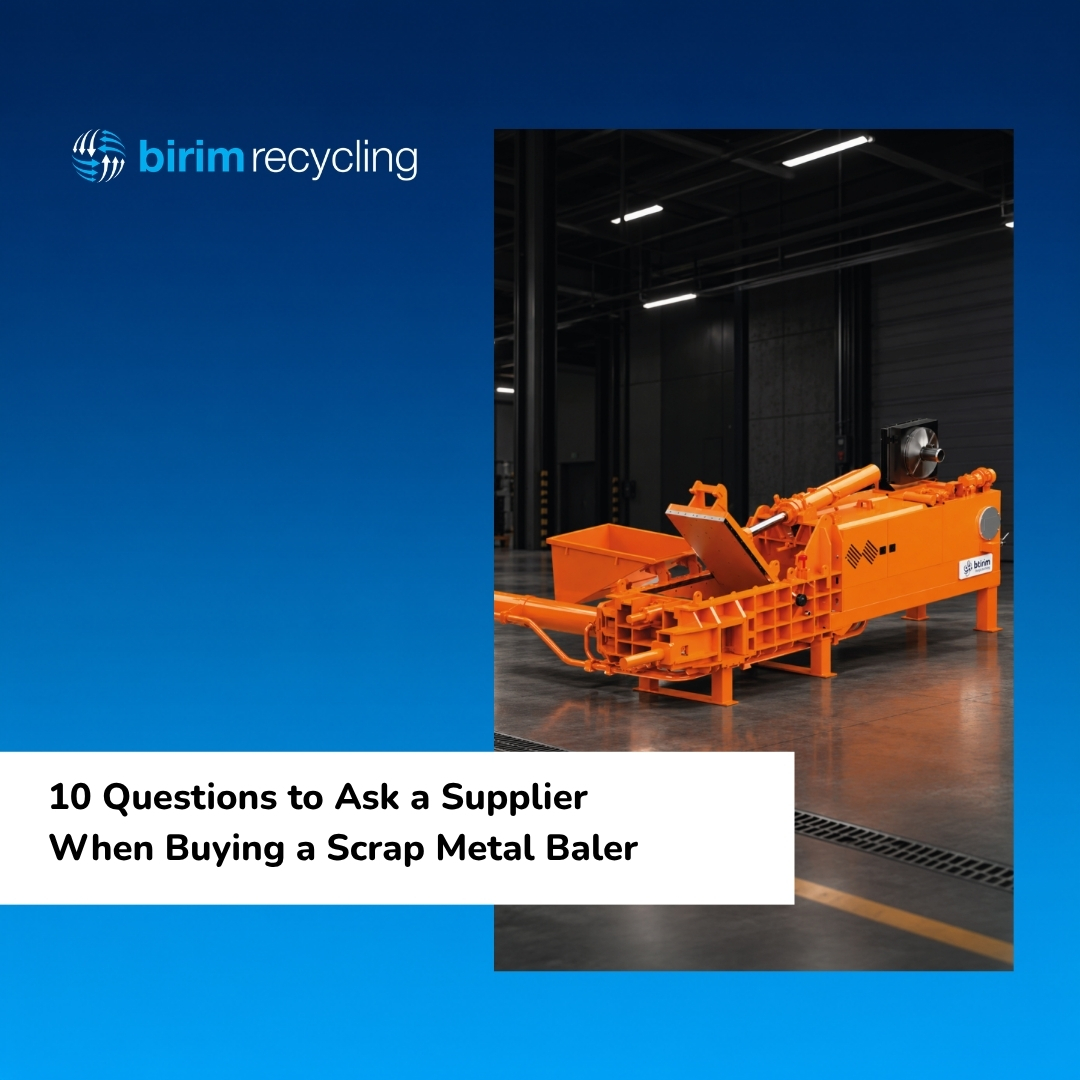
Buying a Scrap Metal Baler involves more than comparing machine prices or reviewing specification sheets. The machine needs to match the scrap being processed, the required processing capacity and the expected bale output. Its components, operating options, maintenance requirements and technical support should also suit the conditions of the operation.
These factors become particularly relevant when comparing quotations from different suppliers. A stated capacity, for example, provides limited information unless the input material and operating conditions behind that figure are also understood. Similarly, two Scrap Metal Baler proposals may differ in configuration, components or service scope even when their main specifications initially appear comparable.
A more useful comparison starts with providing suppliers with the same operational requirements and asking the same specific questions.
The following ten questions can help buyers understand what is actually being offered and whether a proposed Scrap Metal Baler is suitable for their application.
1 What Scrap Materials Can the Baler Process?
Before comparing capacity or bale output, establish whether the proposed machine is suitable for the scrap handled in your facility. Metal scrap can vary considerably in material and form, so compatibility should not be assumed simply because a machine is described as a baler.
Provide the supplier with a clear description of your input materials and ask which are considered suitable input materials for the proposed Scrap Metal Baler. Within Birim Recycling’s baler range, suitable input materials vary by model and include materials such as Steel, Aluminum, Stainless Steel, Copper and Brass in different forms, including Sheets, Car parts, Profiles, Mixed Scrap, Chips, Cables, Cans and Wires. The Can Baler, by comparison, is specifically intended for UBC (Used Beverage Can).
The important question is therefore not how many different materials a machine can process, but whether the proposed configuration is suitable for the materials in your own operation.
2 What Is the Actual Processing Capacity?
Capacity figures become useful only when the conditions behind them are clear. Instead of comparing tons-per-hour values in isolation, ask the supplier what type of scrap the stated capacity is based on, how the machine is fed and under which operating conditions that capacity applies.
- What type of scrap is the stated capacity based on?
- How is the machine fed?
- Under which operating conditions does that capacity apply?
This is particularly relevant because capacity can vary between machine configurations and applications. A headline tons-per-hour figure does not by itself explain what a buyer should expect when processing a particular input material.
When reviewing competing proposals, capacity should therefore be considered together with the scrap to be processed and operating requirements. This creates a more meaningful comparison than simply selecting the machine with the highest stated capacity.
3 What Bale Sizes and Densities Can Be Achieved?
Once material suitability and capacity have been discussed, the next question concerns the expected output. Ask the supplier which bale sizes are available with the proposed machine and what can be expected from the actual input material.
Birim Recycling’s baler range demonstrates why bale specifications should be checked model by model. Leopard Continuous Baler and Tiger 3 Ram Lid Baler list high density bales with bale sizes from 25×25 to 60×60 cm, while Puma 2 Ram Baler lists bale sizes from 30×30 to 70×100 cm. The Can Baler lists a 30×50 bale for its specific application.
| Model | Bale Size | Bale Density | Operating Mode |
|---|---|---|---|
| Leopard Continuous Baler | 25×25 – 60×60 cm | High density | Full automatic / semi automatic |
| Tiger 3 Ram Lid Baler | 25×25 – 60×60 cm | High density | Automatic / manual |
| Puma 2 Ram Baler | 30×30 – 70×100 cm | High density | Automatic / manual |
| Can Baler | 30×50 cm | UBC application | Automatic |
Where bale density is relevant to the purchasing decision, ask the supplier what can be expected for the material you intend to process rather than assuming that a general “high density” description represents the same output under every condition. A Scrap Metal Baler should be evaluated according to the output relevant to its intended application.
4 What Hydraulic and Electronic Components Are Used?
After establishing the expected performance, the comparison can move to the machine’s components. Ask the supplier to identify the principal hydraulic and electronic components included in the proposed configuration.
This information provides more context than capacity and bale dimensions alone. It can also support later discussions about maintenance, spare parts and technical assistance.
For example, Birim Recycling states that Leopard Continuous Baler, Tiger 3 Ram Lid Baler and Puma 2 Ram Baler use heavy duty cylinders and hydraulic systems designed and manufactured in house. Product information also identifies Tier 1 parts supplied by Bosch Rexroth, Siemens, Baluff and Hydac, together with non-contact sensors and original Hardox wear plates.
Requesting comparable component information from each supplier helps clarify what is included in each Scrap Metal Baler proposal.
5 What Automation and Control Options Are Available?
The term “automatic” does not necessarily describe the same operating arrangement on every machine. Buyers should ask which operating modes are available with the proposed configuration and how they relate to the planned workflow.
Different models within the same product range can already illustrate this distinction. Birim Recycling lists full automatic and semi automatic operation for Leopard Continuous Baler, while Tiger 3 Ram Lid Baler and Puma 2 Ram Baler are listed with automatic and manual operation. The Can Baler is described as automatic operation.
Configuration goes beyond the operating mode. Machine configuration can extend beyond the operating mode. Leopard Continuous Baler, for example, can work as a single machine or as an integrated plant with loading hoppers and conveyors.
When evaluating a Scrap Metal Baler, ask what is included in the proposed configuration rather than relying on “automatic” as a standalone specification.
6 What Are the Maintenance Requirements?
Maintenance requirements should be understood before the machine enters operation. Ask the supplier which routine maintenance activities are required, which systems need regular inspection and what maintenance information will be provided for the proposed machine.
The answer should be specific enough for the buyer to understand what will be expected from the operating and maintenance teams. A general statement that a Scrap Metal Baler requires “low maintenance” provides little practical value without explaining the actual requirements.
This conversation also provides a natural basis for discussing wear and spare parts. Once routine maintenance is understood, the buyer can determine which components may require periodic attention and how replacements will be supplied.
7 Which Wear Parts Need Regular Replacement?
Spare and wear parts are easier to manage when their requirements are understood before they are needed. Ask the supplier which parts are relevant to the proposed machine, which parts may need periodic replacement and how replacements can be obtained.
Birim Recycling’s Service & Spare information includes Cylinders, Hardox wear plates, Filters, Sensors, Seals, Blades and Hydraulic Valves among the parts supplied for scrap processing machines. However, this list should not be interpreted as meaning that every component applies to every baler model.
For an accurate comparison, ask each supplier to identify the parts specifically relevant to the Scrap Metal Baler being offered. This gives the buyer a clearer basis for planning spare-parts requirements.
8 What Installation and Training Support Is Included?
A machine quotation should also make clear what happens between delivery and operation. Ask which installation activities are included, what needs to be prepared at the facility and what training will be provided to the operating team.
Birim Recycling scope. Birim Recycling states that it provides on-site installation, operator training and ongoing technical support. The exact scope should still be confirmed according to the individual project and proposed machine.
Clarifying these responsibilities before purchasing a Scrap Metal Baler helps distinguish the supplier’s scope from the preparations expected from the buyer. It also prevents installation and training differences from being overlooked when comparing quotations.
9 What After-Sales and Remote Support Is Available?
After-sales support should be evaluated according to how assistance will actually be accessed once the machine is in operation. Ask who handles technical requests, how support is provided and what happens when an issue cannot be resolved remotely.
For international projects, buyers should also clarify how technical support for the destination country is handled. Birim Recycling provides separate contact channels for domestic and international Service Requests and Technical Support, as well as Spare Parts Requests.
Several Birim Recycling baler models also list “remote diagnosis and trouble shooting via modem connection” for technical assistance. When comparing a Scrap Metal Baler, confirm whether this capability is included in the proposed configuration and what support is available when on-site assistance is required.
10 What Information Should Be Included in the Final Quotation?
The final quotation should provide enough information for the buyer to understand exactly what is being offered. If important technical or service details remain outside the proposal, comparing suppliers on equivalent terms becomes more difficult.
Buyers should ask for the proposed machine and configuration to be clearly identified. Depending on the project, useful information can include suitable input materials, stated capacity, bale size, operating mode, key components, installation and training scope, and available technical and spare-parts support. Optional equipment and project-specific additions should also be clearly distinguished from the main scope.
| Item | Why it matters in a comparison |
|---|---|
| Suitable input materials | Confirms the configuration matches the scrap actually handled |
| Stated capacity | Only comparable when the material and feeding method are stated |
| Bale size | Varies by model and should be checked against the intended output |
| Operating mode | “Automatic” describes different arrangements on different machines |
| Key components | Provides context for maintenance, spare parts and support |
| Installation and training scope | Separates supplier responsibility from buyer preparation |
| Technical and spare-parts support | Determines how assistance is accessed once in operation |
| Optional equipment | Should be clearly distinguished from the main scope |
The purpose is not simply to make the quotation longer. It is to ensure that competing Scrap Metal Baler proposals describe sufficiently comparable scopes so that differences in price can be considered alongside differences in equipment and support.
Choosing a Scrap Metal Baler Based on Your Operating Requirements
A useful supplier comparison begins before the quotations arrive. When each supplier receives the same information about input materials, required capacity and operating conditions, their proposals become easier to evaluate against the same operational need.
For this reason, a Scrap Metal Baler should not be selected through a single capacity figure, bale dimension or purchase price. The machine configuration and support scope should make sense together for the intended application.
Birim Recycling offers Leopard Continuous Baler, Tiger 3 Ram Lid Baler, Puma 2 Ram Baler, Car Baler and Can Baler configurations for different scrap processing requirements. If you are evaluating a Scrap Metal Baler, sharing your input materials, required capacity and operating conditions with Birim Recycling can help identify which configuration should be evaluated for your application.
Supplier comparison checklist
- Suitable input materials for your scrap
- Capacity, with material and feeding method stated
- Bale size and expected density for your material
- Hydraulic and electronic components included
- Available operating modes and plant configuration
- Routine maintenance requirements
- Wear parts relevant to the proposed model
- Installation and operator training scope
- After-sales and remote support arrangements
- A quotation that identifies all of the above
Request a Scrap Metal Baler Assessment
Share your input materials, required capacity and operating conditions, and Birim Recycling will identify which baler configuration should be evaluated for your application.
Contact Birim RecyclingRelated equipment: Scrap Metal Shears · Material Handlers · Shredder · Chip Processing · About Birim Makina
